Auf dieser Seite
- Four cases need four paths — returns, undeliverable parcels, damage, and loss are not the same problem.
- Photograph the outer carton with the shipping label in the same frame before you open anything.
- For a lost parcel, wait out the carrier’s tracing window; for a “delivered” dispute, request Proof of Delivery first.
- Standard liability is usually a freight multiple or a weight cap — not the item’s full retail value.
- Confirm claim windows, redelivery fees, and compensation in your line’s written terms before you ship.
A parcel goes missing, arrives crushed, or comes back marked undeliverable. The sellers who resolve these cases fastest are not the loudest — they are the ones who kept the right records.
This guide prepares you for the four after-sales situations that sellers shipping from China face most. It focuses on evidence and process, not on promising outcomes no one can guarantee.
Four situations, four paths
Each case needs a different first move. Mixing them up wastes time and can cost you the claim.
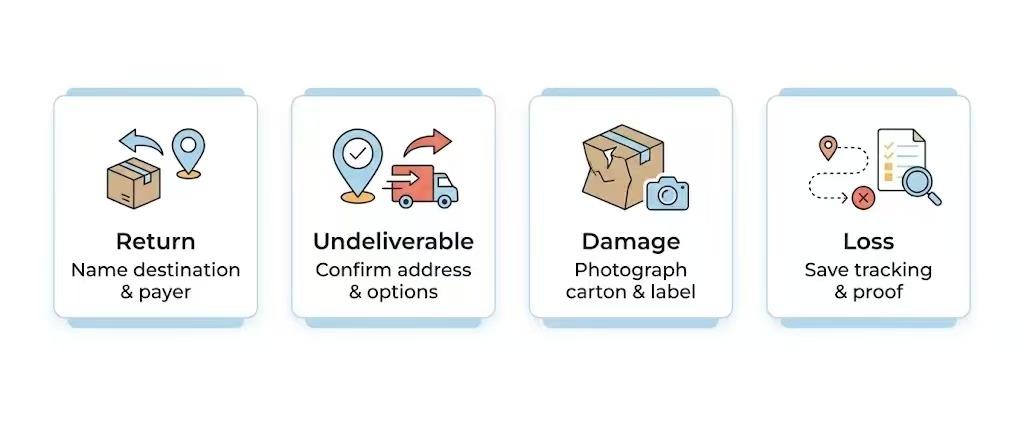
| Situation | Was es ist | First move |
|---|---|---|
| Return | Buyer sends the parcel back | Name the return destination and who pays before it ships |
| Undeliverable | Bad address, failed delivery, unclaimed | Confirm the address and redelivery options |
| Damage | Arrives broken or contents missing | Photograph the carton and label before opening |
| Loss | Tracking stops, parcel never arrives | Save the full tracking record and proof of value |
Returns: name the destination and the cost split
Start with three questions: where does the parcel go back to, who pays the return freight, and who carries any import tax on the way back.
Most crossborder sellers use one of two routes. A local return warehouse keeps the goods in the buyer’s country and avoids a second border crossing. Sending the parcel back to the origin country is cheaper to set up but slower, and the goods cross a border again.
If the parcel returns across a border rather than to a local return warehouse, import taxes may apply again unless it is properly declared as returned goods.
Our DDP vs DAP explanation outlines how tax responsibility shifts on the outbound leg — the same logic applies when you decide who owns the cost on the way back.
Give the buyer a clear return address and a written instruction. Guessing the destination is how returns end up sitting in the wrong warehouse for weeks.
Undeliverable parcels: fix the cause, then decide
Start with the address. Check the ZIP code, unit number, and phone number before anything else.
Many couriers attempt redelivery or hold the parcel first. Each extra attempt can add a fee, and a failed return trip can cost more than the original freight.
Redelivery and return charges vary by route. Confirm the exact figure in your line’s written terms rather than assuming a standard amount — a point we also stress in our quote-comparison guide.
Damage: one photo frame must show both things
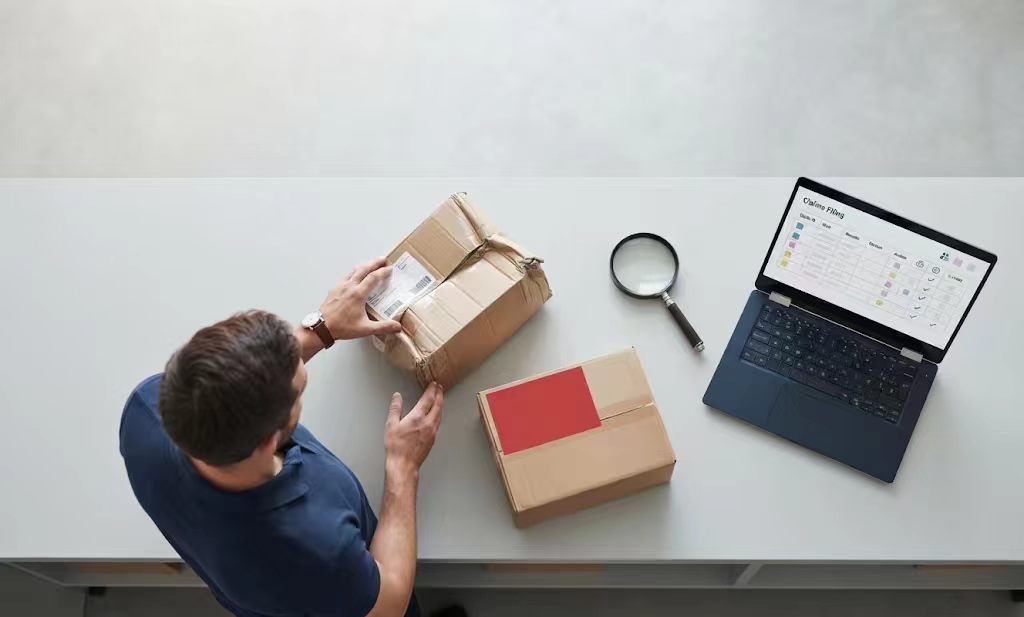
Photograph the outer carton before you open it, with the shipping label clearly visible in the same frame. That single image ties the damage to the specific parcel and tracking number.
Then shoot the packaging and the item inside. Keep every layer until the case closes, because carriers often ask for the same proof again.
Loss: wait out the trace, then check for a false delivery
A stalled scan is not yet a loss. Carriers usually need to exhaust their own tracing window — often in the range of 15 to 30 days with no scan — before they accept a formal claim. Ask your forwarder for the exact window on your line.
When tracking shows “Delivered” but the buyer says nothing arrived, do not open a loss claim first. Request Proof of Delivery (POD) from the forwarder — the signature or delivery coordinate — and check it against the address on the order.
Many such disputes turn out to be a wrong drop point rather than a lost parcel.
Die tracking-events guide helps you read where a scan stopped.
As a reference for what carriers expect, the USPS international claims process asks for a tracking number, proof of mailing, and proof of value, with filing windows that differ by service. Other carriers follow a similar logic: document first, then file.
The evidence checklist
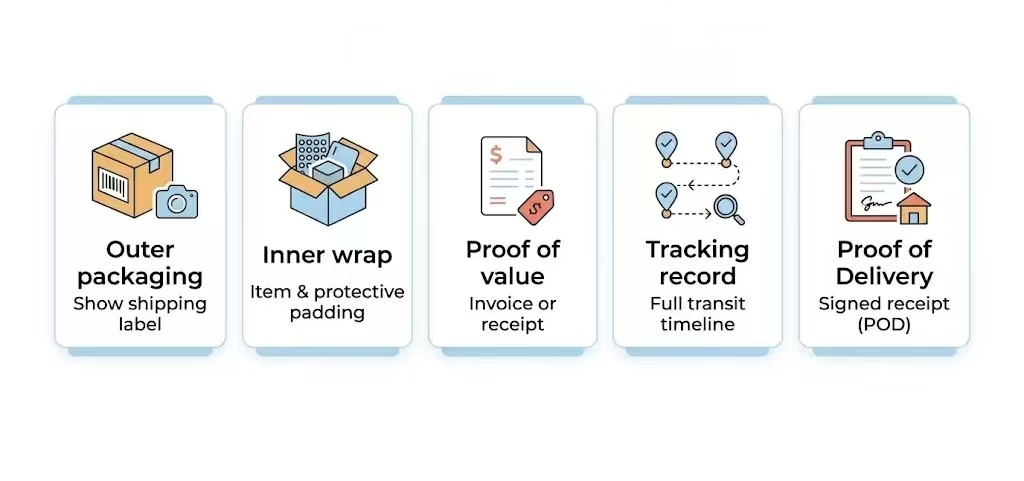
| Evidence | Why it matters | When to collect it |
|---|---|---|
| Outer packaging photos (with the shipping label clearly visible) | Must show both the damage and the tracking label in the same frame | Before opening the parcel |
| Item and inner-wrap photos | Show the actual damage | As soon as damage is found |
| Proof of value | Supports any compensation claim | Invoice or receipt, kept at dispatch |
| Full tracking record | Shows when and where scans stopped | Saved when the issue appears |
| Proof of Delivery (POD) | Resolves “delivered but not received” disputes | Request as soon as the buyer reports non-receipt |
Compensation: know what the standard terms really cover
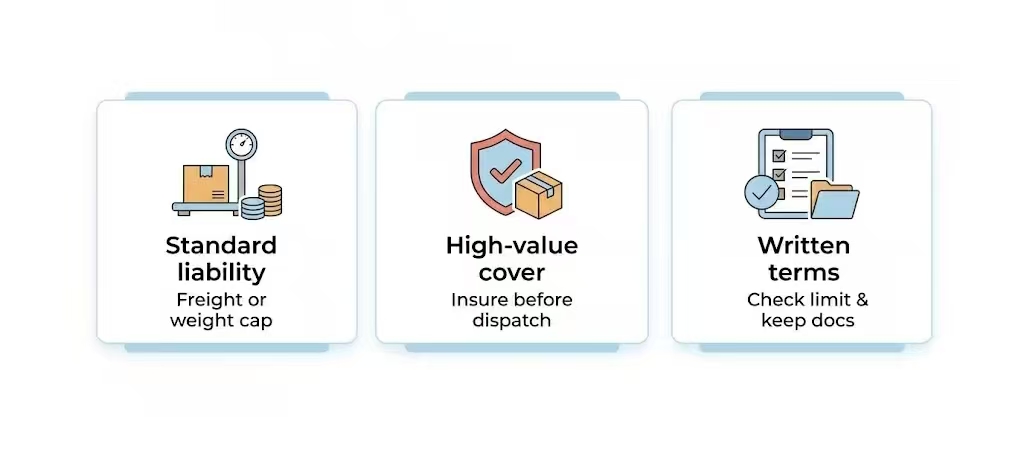
Avoid promising a fixed payout to your buyer. Standard carrier liability is usually a freight multiple or a weight-based cap — for example, a multiple of the shipping cost or a per-kilo limit under the applicable convention — not the item’s full retail value.
Coverage for high-value goods normally requires declared value or separate insurance, bought before dispatch. Raise the subject with your forwarder up front, and price it into the order.
Claim windows and payout rules depend on the carrier, service, and route. Ask for the written terms that apply to your specific line before you ship, and pass only confirmed facts to your customer. Keep every document until the case closes.
A prevention checklist you can use today
- Use packaging that survives a rough last mile, and photograph unusual items before dispatch.
- Make the shipping label visible in the first damage photo, together with the carton.
- Verify addresses at checkout, including unit numbers and phone numbers.
- Save the commercial invoice and value proof for every order.
- Write a return policy that names the return destination and the cost split.
- Know your line’s written claim window, liability cap, and fee schedule.
These steps prevent most disputes before they start. If a case does open, submit your evidence packet through our claims and support portal within your line’s deadline, or review our international shipping guide to tighten your pre-dispatch documentation.
Häufig gestellte Fragen
What should I do first when a parcel is damaged?
Photograph the outer carton before opening it, with the shipping label clearly visible in the same frame. Then shoot the packaging and the item inside. Keep every layer until the case closes, because carriers often request the same proof again.
What evidence helps with a lost parcel claim?
Save the full tracking record, your proof of value such as an invoice or sales receipt, and the shipping label. A stalled scan is not yet a loss — carriers usually need to exhaust their tracing window, often 15 to 30 days with no scan, before accepting a formal claim.
Who pays duty on a cross-border return?
First decide where the parcel returns: a local return warehouse avoids a second border crossing, while sending it to the origin country means it crosses a border again. If it returns across a border, import taxes may apply again unless it is properly declared as returned goods. Agree the destination, the return freight, and the tax responsibility before the parcel moves.
Why do undeliverable parcels cost extra?
A bad address or failed delivery can trigger redelivery or return fees. Check the ZIP, unit number, and phone number first, and confirm the exact charges in your line’s written terms.
How long do I have to file a claim?
Claim windows differ by carrier, service, and route, so there is no single deadline. Confirm the written window that applies to your specific line before you ship, and pass only confirmed facts to your buyer.
What if tracking says “Delivered,” but the buyer says they never received it?
Do not open a loss claim first. Request Proof of Delivery (POD) from your forwarder — the signature or delivery coordinate — and compare it with the address on the order. Many such disputes turn out to be a wrong drop point. If the POD is valid but the parcel is still missing, ask the forwarder how to escalate the investigation.
How are lost or damaged parcels usually compensated?
Standard carrier liability is typically a freight multiple or a weight-based cap, not the item’s full retail value — for example a multiple of the shipping cost or a per-kilo limit under the applicable convention. Declared value or separate insurance, bought before dispatch, is what protects high-value goods. Exact rules differ by carrier and route, so confirm the written terms for your line.