On this page
Forwarders bill on chargeable weight, not just the scale weight you see on a scale. Chargeable weight is the greater of actual weight and volumetric weight, which is why a light but bulky parcel can be charged as if it were heavier.
This guide explains the volumetric formula, route divisors, and why two equal-weight parcels can cost differently. For a worked example, see the US cost example.
Actual weight vs chargeable weight
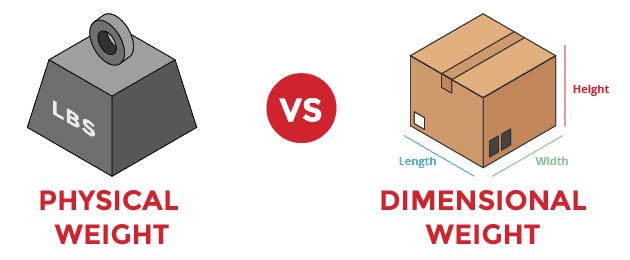
Actual weight is what the parcel weighs on a scale. Chargeable weight is the number the forwarder bills on, and it is the larger of actual weight and volumetric weight. When a parcel is bulky for its weight, the volumetric figure wins, and that is the number that sets the price.
The volumetric formula
Volumetric weight is calculated by multiplying length, width, and height in centimetres, then dividing by a divisor. For air parcels the divisor is often 6000, while some express or postal products use 5000 or another factor. The result is the volumetric weight in kilograms, which competes with the actual weight for the bill.
Route divisors change the number
The same box can bill differently depending on the lane and product. Air parcels often use 6000, while express may use 5000, which raises the volumetric weight and therefore the chargeable weight. Always ask which divisor applies to the quote you are reading.
Why two 1kg parcels cost differently
If one 1kg parcel is much larger, its volumetric weight exceeds 1kg and becomes the chargeable weight. The forwarder bills the bigger number, so size, not just scale weight, drives cost. Two parcels with the same actual weight can land in different price bands because their dimensions differ.
How to lower your chargeable weight
Use tighter packaging to shrink dimensions, since volume drives the bill for light goods. Right-sizing cartons is often the fastest way to cut freight cost, because it pulls the volumetric weight down toward the actual weight. Review packaging before every rate review.
Where chargeable weight fits your decisions
Chargeable weight is the basis for choosing a shipping method, and it appears whenever you compare quotes fairly. Our how parcel rates are calculated and what to expect before shipping pages explain the surrounding cost picture.

Bottom line
Forwarders bill on chargeable weight, the greater of actual and volumetric weight. The divisor varies by route, so a bulky 1kg parcel can cost more than a dense one. Tight packaging is the most direct way to lower the number and the bill.
Frequently asked questions
What is chargeable weight?
Chargeable weight is the number a forwarder bills on. It is the greater of the actual weight and the volumetric weight, so a light but bulky parcel can be charged as if it were heavier.
How do I calculate volumetric weight?
Multiply length, width, and height in cm, then divide by a divisor such as 6000 for air or 5000 for some express lanes. The result is the volumetric weight in kilograms.
Why do two 1kg parcels cost different amounts?
If one parcel is much larger, its volumetric weight exceeds 1kg and becomes the chargeable weight. The forwarder bills the bigger number, so size, not just scale weight, drives cost.
Does the divisor change by route?
Yes. Air parcels often use 6000, while express or postal products may use 5000 or another factor. The same box can bill differently depending on the lane and product.
How can I lower my chargeable weight?
Use tighter packaging to shrink dimensions, since volume drives the bill for light goods. Right-sizing cartons is often the fastest way to cut freight cost.